
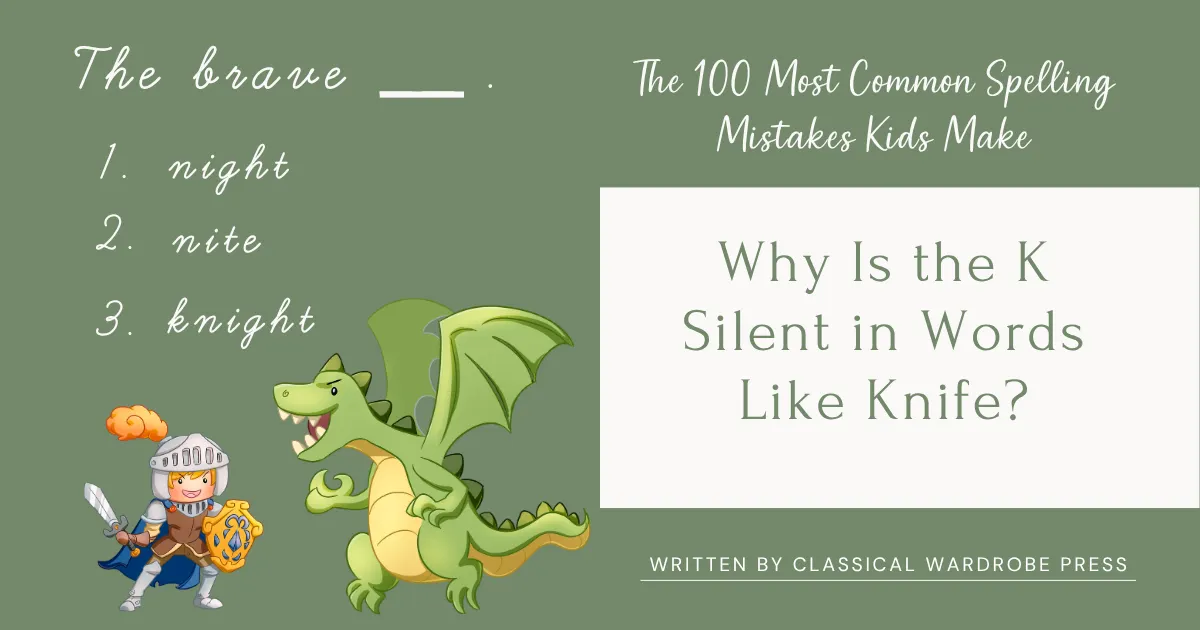
Why Is the K Silent in Knife? Understanding the Silent KN Pattern
Discover why words like knife, knight, and knee begin with a silent K. Learn the history of the silent KN pattern and a Charlotte Mason-inspired approach to teaching spelling.
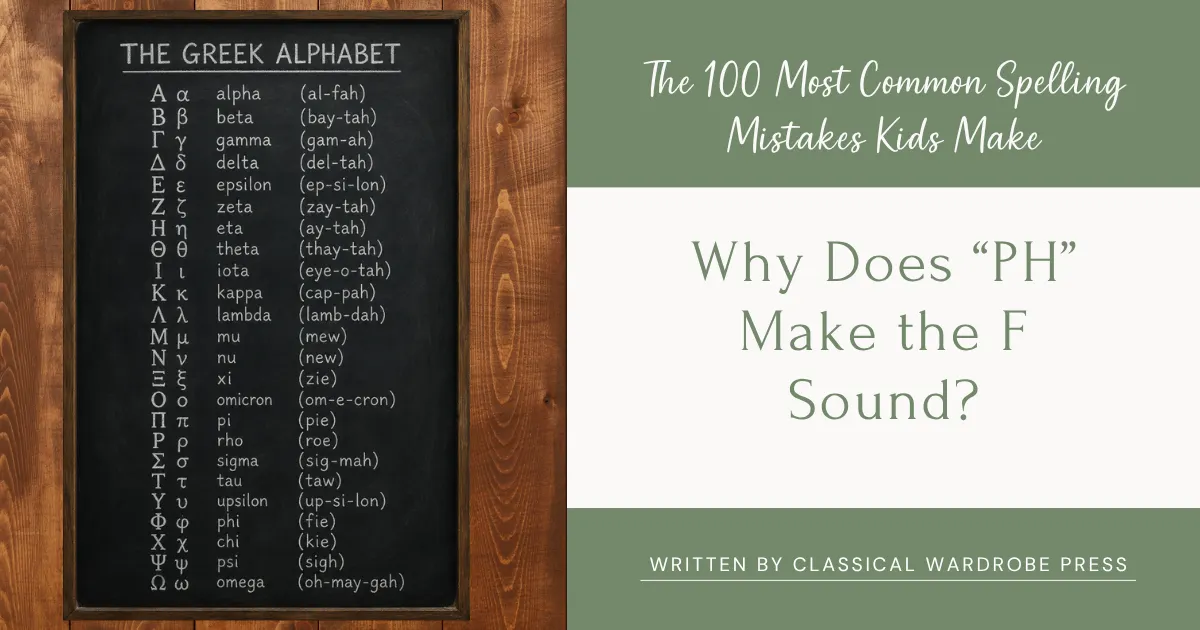
Why Does “PH” Make the F Sound?
Why do phone, photo, and elephant use PH instead of F? Discover the Greek origins of the PH spelling pattern and how it helps children understand English spelling.
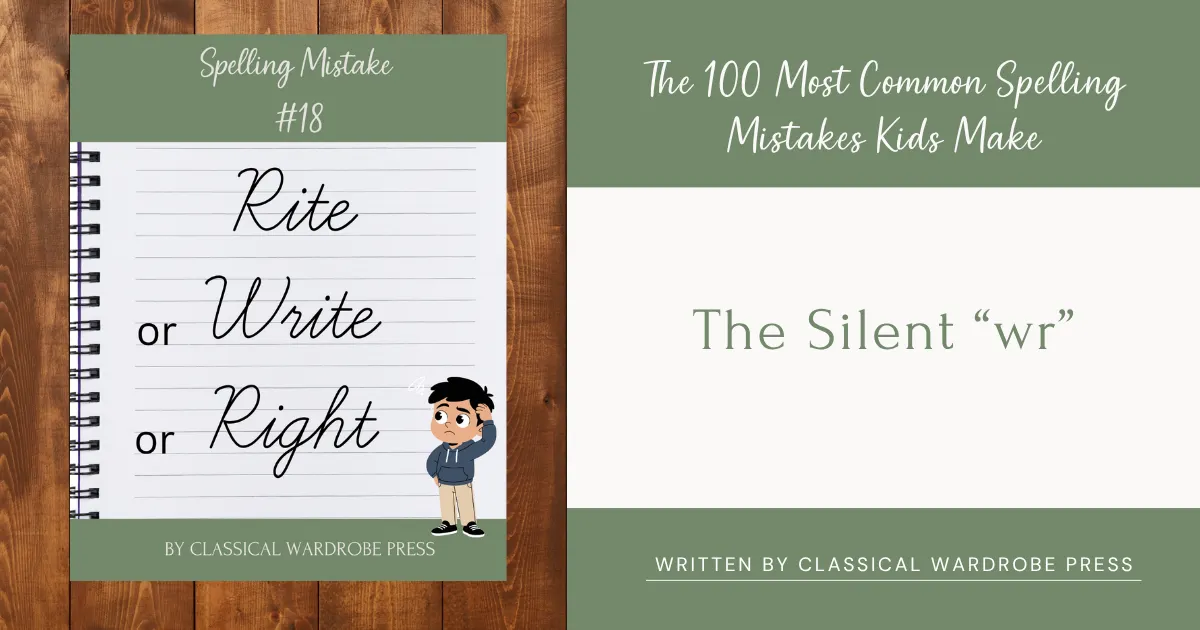
The Silent WR Spelling Pattern: Why We Write Wrong, Write, and Wrist
Learn why words like wrong, write, and wrist begin with a silent W. Discover the history behind the WR spelling pattern and how to teach it through literature and observation.
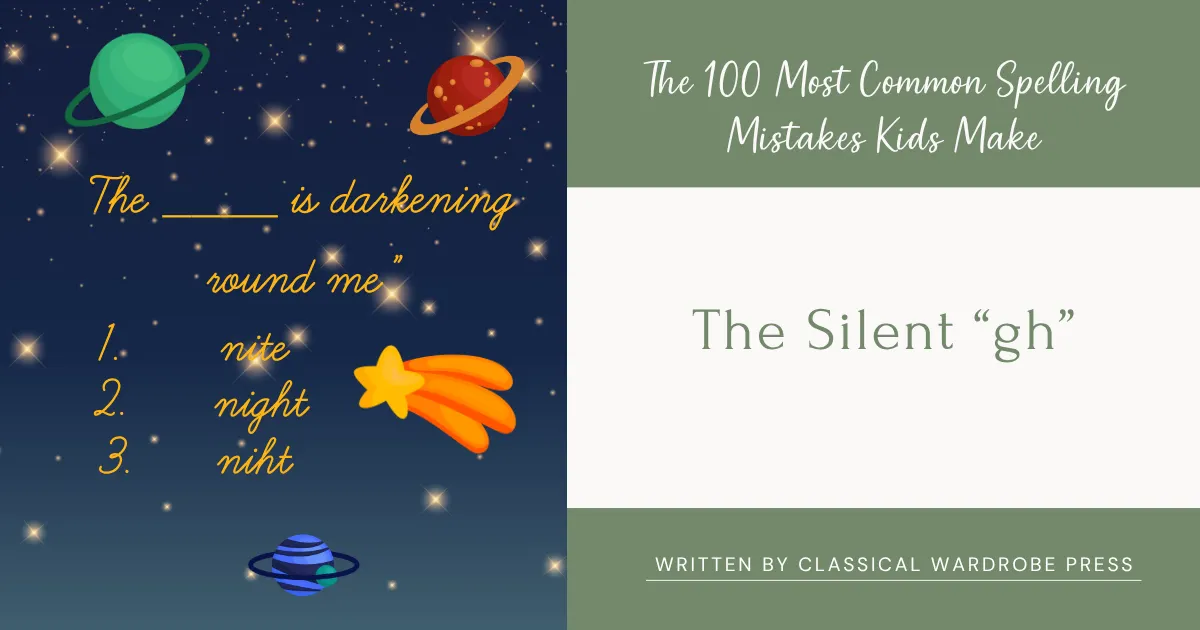
The Silent "gh"
Why do we write night instead of nite? Discover the history behind silent GH words like light, night, enough, and laugh with this gentle spelling lesson for children.
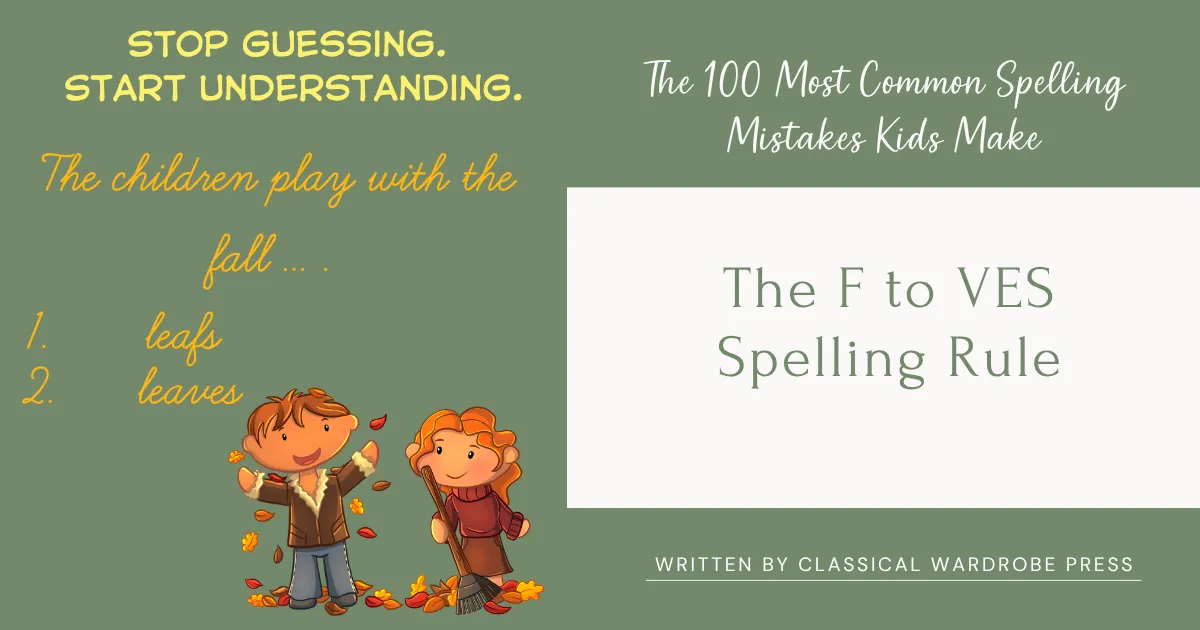
The F to VES Spelling Rule
Learn the F to VES spelling rule with simple examples like leaf to leaves and wolf to wolves. A gentle guide to plural spelling patterns for children.
Latin Prefixes in English Spelling
Learn how Latin prefixes shape English spelling. Discover simple patterns, word families, and a root-based approach to help children spell with confidence.
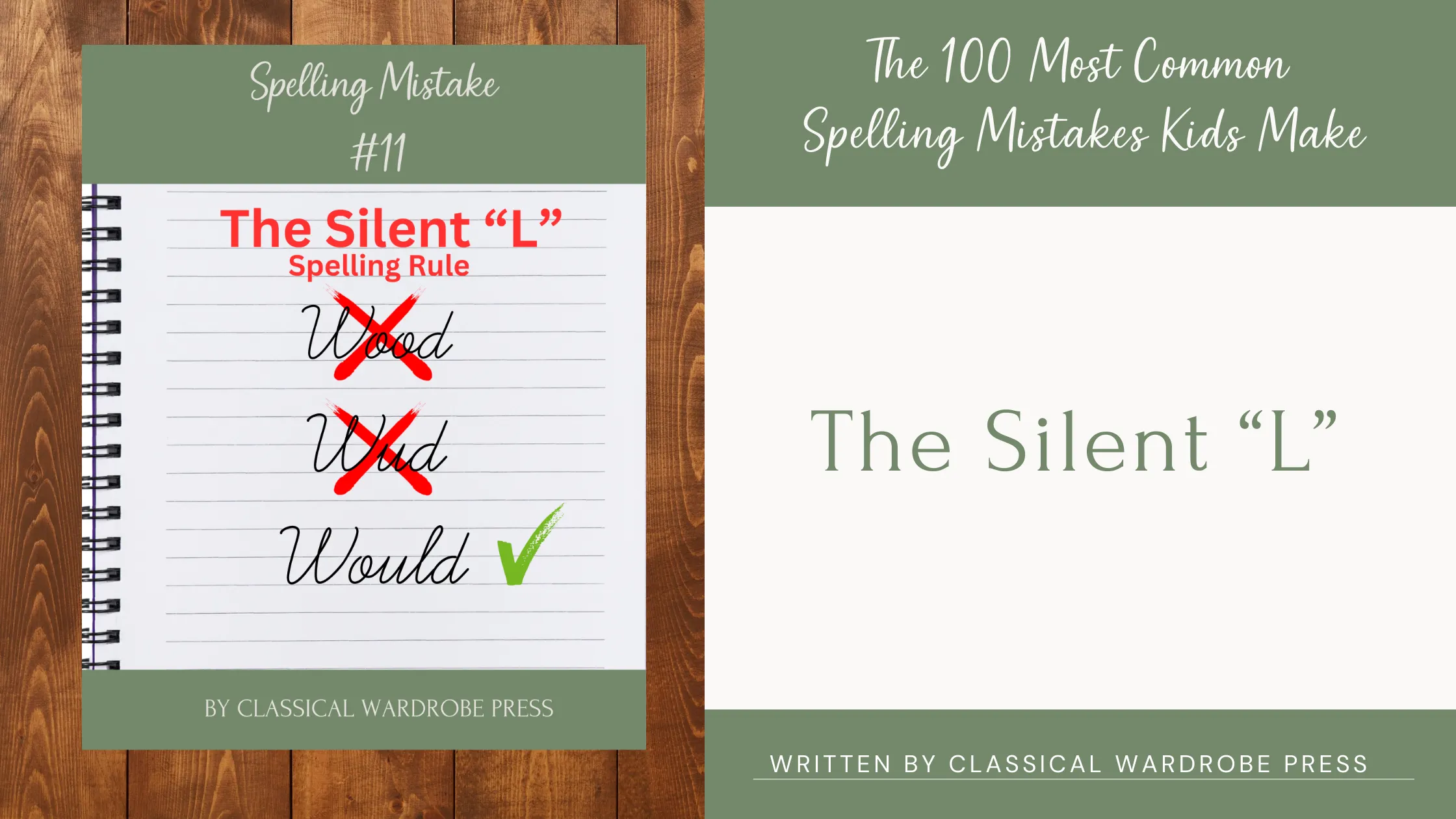
The Silent “L”: Why We Write Would, Could, and Should
English spelling often preserves history. Discover why would, could, and should contain a silent L, and how understanding patterns helps children learn to spell with confidence.
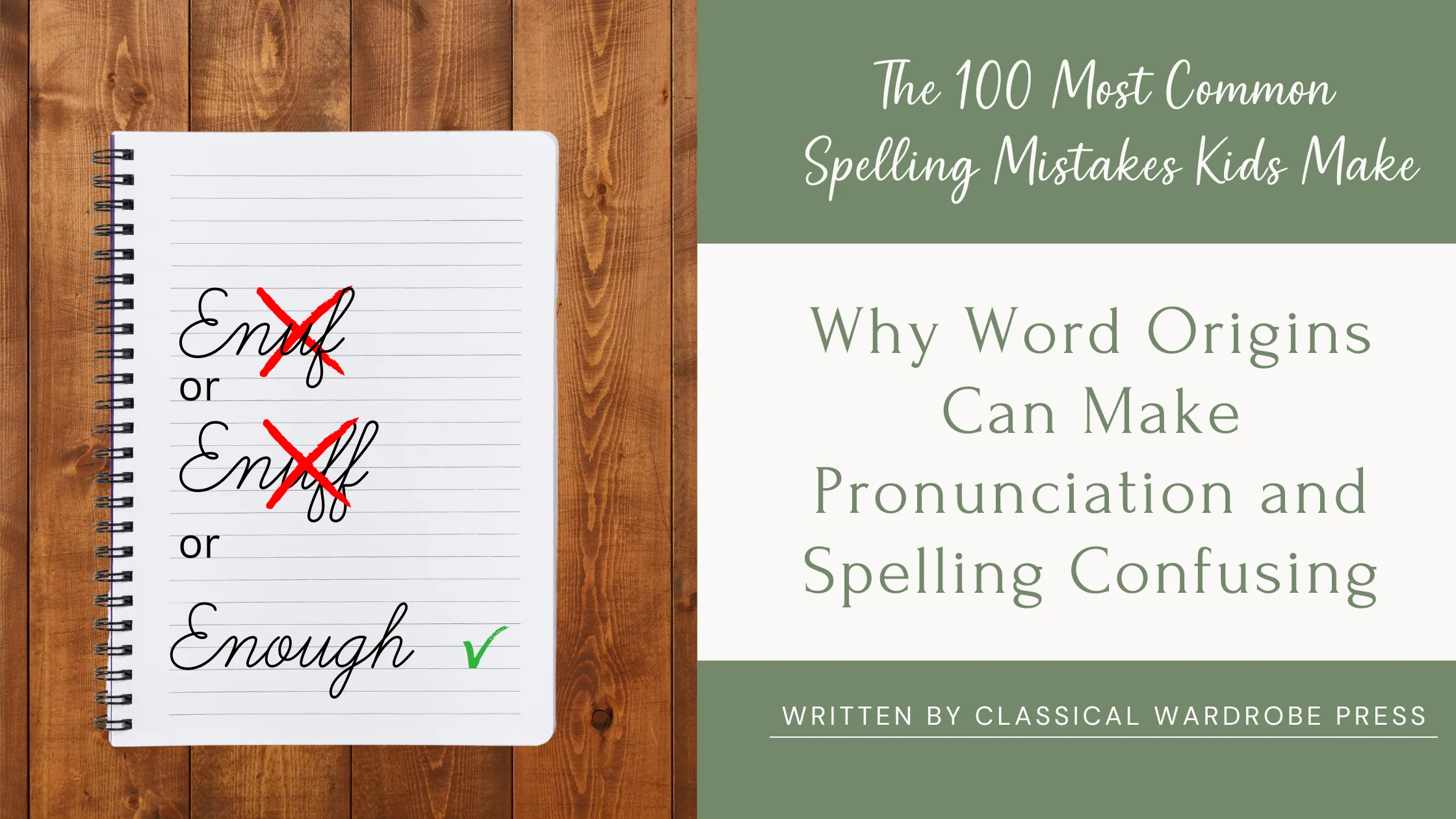
Why Word Origins Can Make Pronunciation and Spelling Confusing
English spelling mistakes often follow logic. Discover how word history and changing sounds explain confusing spellings like “enough.”