
The 1–1–1 Doubling Rule
The 1–1–1 Doubling Rule
Feb 23, 2026
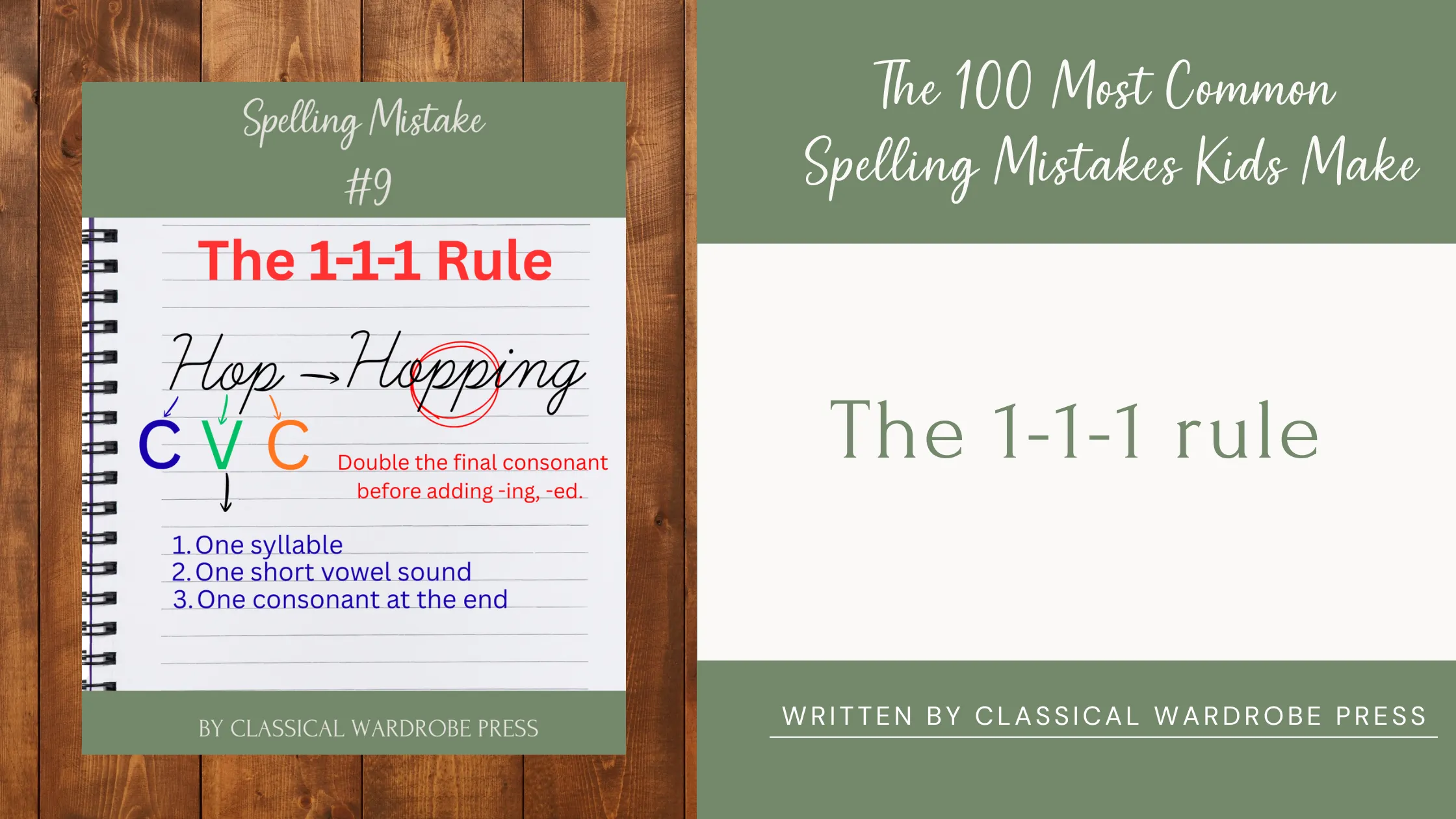
One of the most confusing spelling moments for children happens when they begin adding endings like -ing or -ed.
Why does hop become hopping, but hope becomes hoping? Why do we double sometimes, but not always?
The answer lies in what is often called the 1–1–1 rule.
Understanding this simple pattern helps children avoid many common spelling mistakes and strengthens their understanding of short and long vowel sounds.
What Is the 1–1–1 Doubling Rule?
We double the final consonant before adding a suffix when a word has:
- 1 syllable
- 1 short vowel sound
- 1 consonant at the end
If all three conditions are true, we double the final consonant before adding -ing, -ed, or similar endings.
Let us look at it closely.
hop → hopping
- One syllable ✔
- Short vowel sound (ŏ) ✔
- One consonant at the end (p) ✔
So we double the p:
hop → hopping
The doubling protects the short vowel sound.
Why Doubling Matters
In English, spelling often works to preserve pronunciation.
If we wrote:
hop → hoping
the vowel would change. It would become long, as in hope.
Doubling the consonant keeps the vowel short.
Compare:
- hop (short ŏ)
- hopping (still short ŏ)
- hope (long ō)
- hoping (long ō remains)
The silent e makes the vowel long, see the Magic "e" rule. When there is no Magic "e", and the vowel is short, doubling the consonant helps keep it short when adding endings.
More Examples
Here are more 1–1–1 words:
- sit → sitting
- run → running
- bat → batting
- stop → stopped
- plan → planning
In each case:
- One syllable
- One short vowel
- One consonant at the end
So we double.
When We Do NOT Double
Children also need to see when the rule does not apply.
hope → hoping
- One syllable ✔
- Long vowel (because of magic e) ✖
- So we drop the e and add -ing. No doubling.
jump → jumping
- Ends with two consonants (mp) ✖
- No doubling.
read → reading
- Vowel team (ea) ✖
- No doubling.
Seeing these contrasts helps the rule become clear.
A Charlotte Mason Approach: Word Building
Rather than teaching this as a dry rule, Charlotte Mason encouraged helping the child see patterns visually and relationally. In Home Education (pp. 202–203), she describes word-building exercises where children study families of words carefully, almost as though learning the face of a friend.
First let's source our words from a good classical text. In this example we will take the nursery rhyme Sleeping Bunnies from Mother Goose.
"See the little bunnies sleeping till it's nearly noon
Come and let us gently wake them with a merry tune
Oh how still, are they ill, wake up soon
Hop little bunnies, hop, hop, hop"
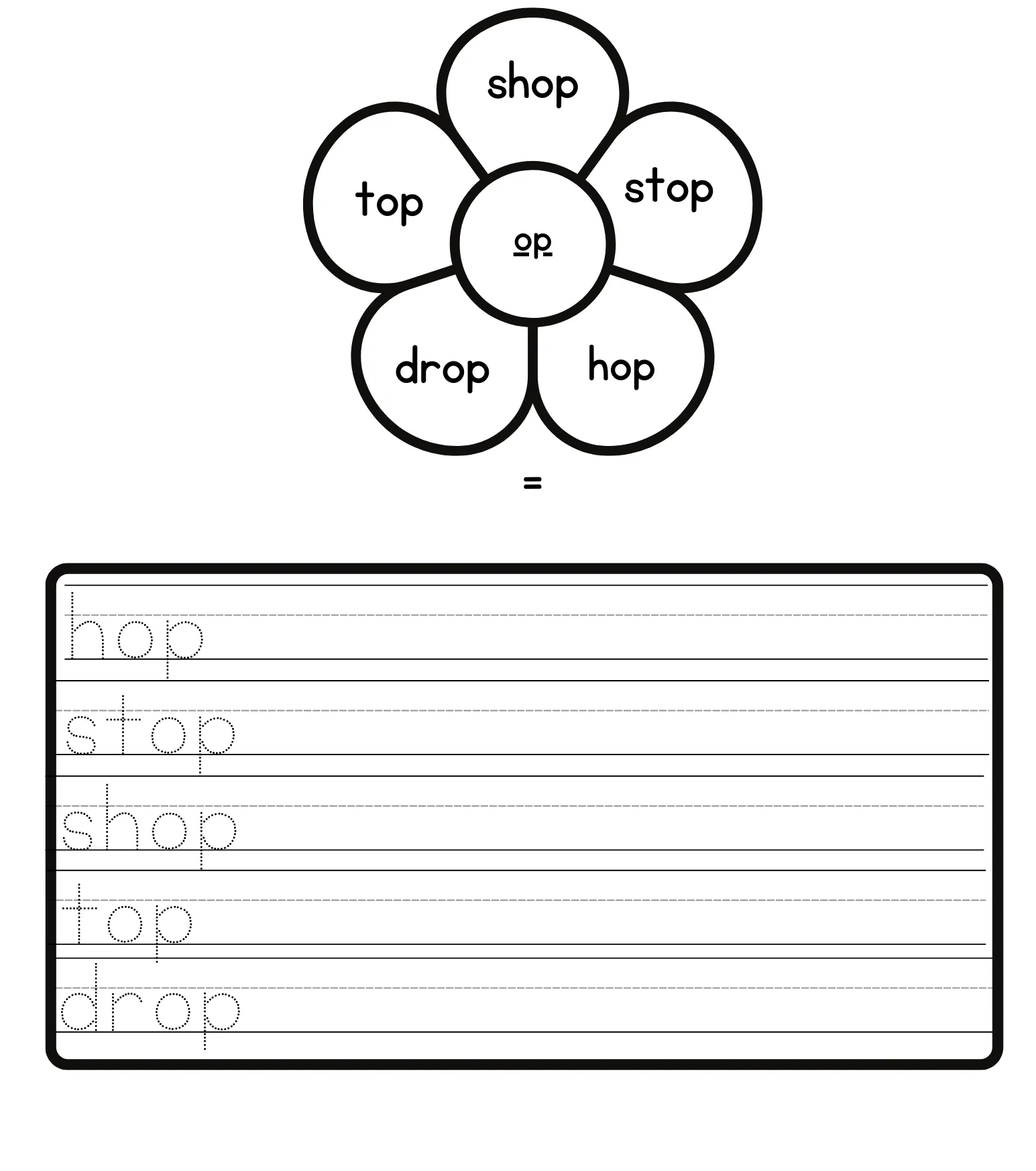
We might begin with:
A first word building exercise with the short vowel family
- hop
- stop
- top
Then a second building exercise adding "ing" at the endings:
- hopping
- stopping
Now compare with the extract from The Little Match Girl by Christian Andersson
"The little girl clings to hope despite her suffering."
A first word building exercise with the Magic "e" family
- hope
- rope
- slope
Then second building exercise adding "ing" at the endings:
- hoping
- roping
The child sees the pattern. The eye recognizes that hop behaves differently from hope. Over time, this visual familiarity builds confidence and accuracy.
The Common Mistake
A frequent error children make is writing:
- hop → hoping (when they mean hopping)
- run → runing
- stop → stoped
These mistakes show that the child has not yet internalized the protection of the short vowel. Once they understand the Magic "e" rule and the 1-1-1 doubling preserves the short sound, the pattern begins to make sense.
English Is Consistent, Even When It Looks Complicated
At first glance, English spelling seems irregular. But many so-called irregularities are protecting pronunciation.
The 1–1–1 rule is not random. It is logical. It keeps vowel sounds stable when endings are added.
When children see this, spelling becomes less about memorizing isolated words and more about understanding structure. And structure builds confidence.