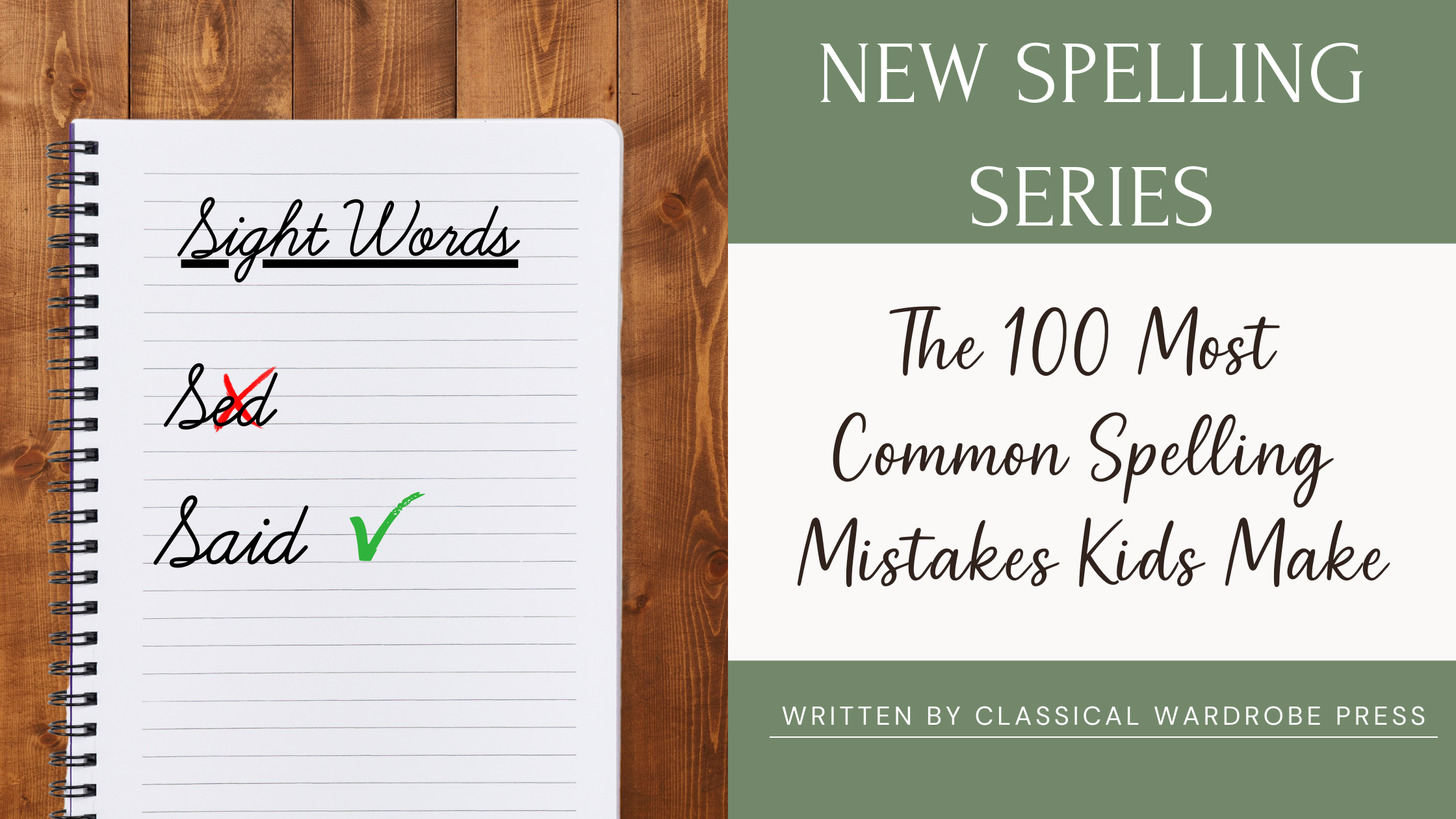
Introducing Our New Series: The 100 Most Common Spelling Mistakes Kids Make
Introducing Our New Series: The 100 Most Common Spelling Mistakes Kids Make
Jan 07, 2026
Who has not already hesitated about a word's spelling, or between two words that sound the same? Spelling is one of those skills that quietly shapes confidence for life and has a powerful impact on the image you project. A CV full of typos and spelling mistakes will push away opportunities, not due to a mismatch of perceived 'fit' for the role or culture, but because the spelling errors sent the wrong message.
A strong foundation in spelling is built from the early years of education. This foundation is built step by step, word after word, with good habits, patience and (in our opinion) good books. When a child can spell with ease, writing becomes freer, reading feels more natural, and communication flows without hesitation. When spelling is shaky, however, even the most creative thoughts can feel difficult to put down on paper.
That is why we are so excited to introduce our new blog series: The 100 Most Common Spelling Mistakes Kids Make, a gentle, weekly series designed to build confident spellers through thoughtful, age-appropriate learning.
This series is deeply rooted in the traditions of classical education and inspired by the wisdom of Charlotte Mason, where learning is seen not as something rushed or forced, but as something cultivated slowly, carefully, and with joy.
Why Spelling Still Matters
In an age of spell-checkers and autocorrect, it can be tempting to think spelling is no longer essential. But strong spelling skills are closely tied to strong reading, clear writing, and long-term academic success.
When children spell well, they:
- Read more fluently
- Write more confidently
- Express ideas more clearly
- Speak with better articulation
- Can draw upon a wider lexicon to express themselves
- Develop stronger memory and attention to detail
Spelling is not just about correctness, it is about clarity of thought. Classical education has always understood this: language is a tool for thinking, and spelling is one of its foundations.
Starting Young, Building Habits
“The spelling lesson should be short, sharp, decisive, and successful.”
— Charlotte Mason
Good spelling habits begin early. Young children are especially receptive to patterns, sounds, and visual memory. When spelling is introduced gently in the early years, through reading, copywork, and meaningful exposure, it becomes a natural skill rather than a constant struggle.
Charlotte Mason emphasized that habits formed early are carried for life. Short, consistent lessons done with care are far more effective than long drills or worksheets. This is why our series focuses on small steps: identifying common mistakes, understanding why they happen, and gently correcting them through practice and exposure.
The Power of Reading and Copying
Two of the most powerful tools for developing good spelling are also the simplest: reading and copying.
- Wide, living reading exposes children to correct spelling in context. Words seen again and again in well-written books are naturally absorbed.
- Copywork trains the eye and hand together. When a child carefully copies a sentence or passage, they are not just writing letters, they are absorbing spelling, punctuation, and rhythm all at once.
These methods align beautifully with Charlotte Mason’s philosophy: learning that nourishes rather than overwhelms, that forms attention and accuracy without pressure.
A Gentle, Structured Approach

This new series breaks spelling mistakes into clear, manageable categories:
- Sight word errors
- Confusion between similar words
- Phonetic spelling mistakes
- Double letter and ending errors
By addressing spelling this way, children (and parents) begin to see patterns instead of random errors. Understanding replaces frustration, and confidence grows naturally.
Soft Learning for Lasting Results
At the heart of this series is soft learning, learning that respects the child’s pace, honours their effort, and builds skill without fear of failure. Mistakes are treated not as shortcomings, but as signposts showing us where gentle guidance is needed.
Our hope is that this series becomes a quiet companion in your homeschool routine or classroom: something you return to weekly, building strong habits, one word at a time.
Because good spelling is not about perfection, it is about confidence, clarity, and a lifelong love of language.