
Why Learning Cursive Is Essential in a Digital Age
Why Learning Cursive Is Essential in a Digital Age
Mar 23, 2026
In an age of tablets, keyboards, and autocorrect, one can wonder if cursive handwriting is still worth learning. Yet research consistently shows that learning cursive offers powerful benefits for children’s brains, literacy development, and academic success. For parents and educators seeking to strengthen foundational skills, teaching cursive is not just worthwhile, it is essential.
If you are using a structured program such as a cursive workbook, you may be giving your child far more than neat handwriting. You may be strengthening memory, improving spelling, and building lifelong learning skills.
Why Learning Cursive Is Essential: Cursive Activates the Brain for Deeper Learning
Unlike typing, cursive writing requires continuous, coordinated movement. Each letter flows into the next, engaging fine motor skills, visual processing, and memory at the same time. A high-density EEG study found that handwriting, particularly cursive, produces significantly greater brain connectivity than typing, especially in areas related to learning and memory (Askvik, Van der Weel, & Van der Meer, 2020).
When children practice cursive regularly, these neural pathways strengthen, making it easier to process and retain new information.
Cursive Improves Memory and Retention
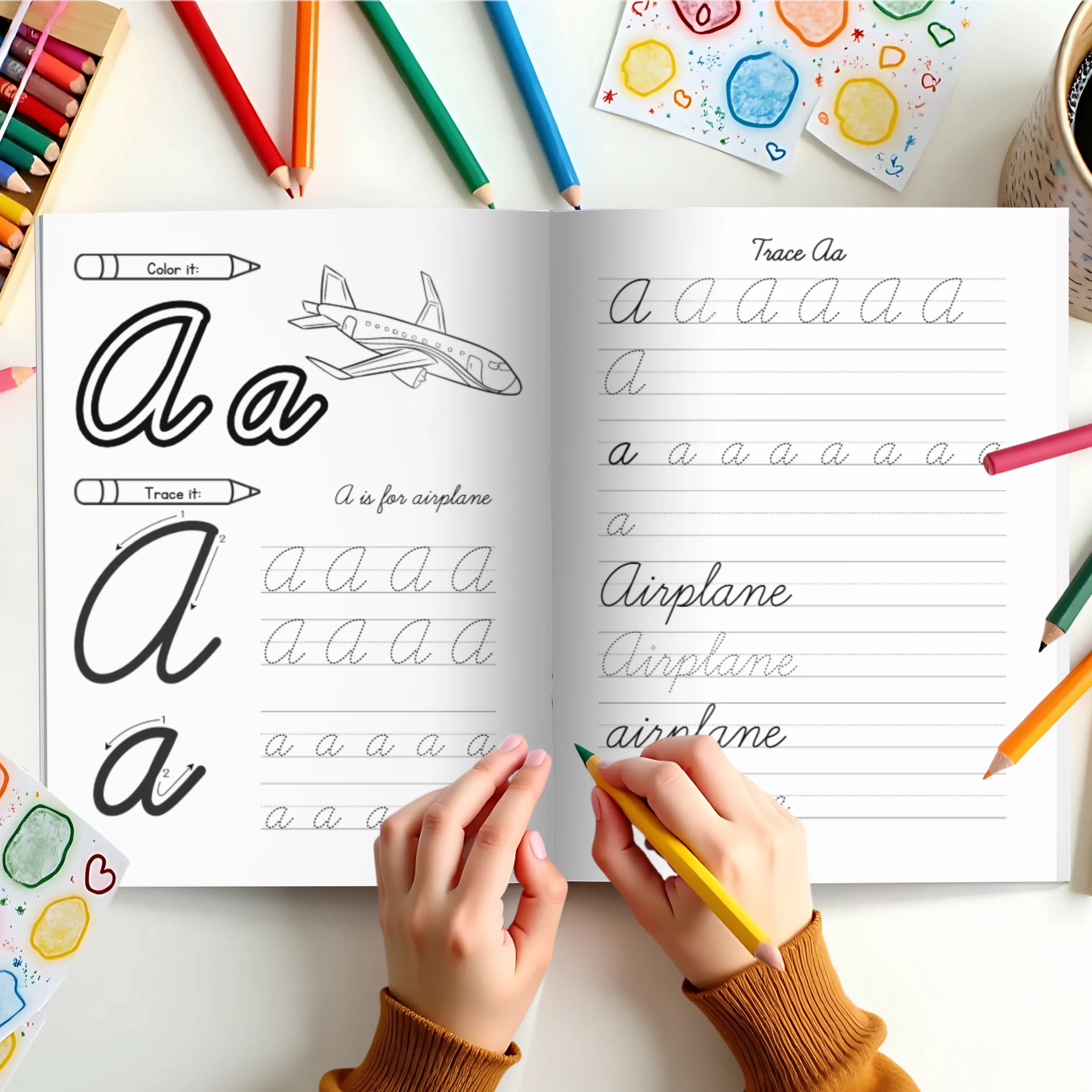
One of the most powerful benefits of cursive is its effect on memory. Writing in a flowing script forces the brain to process language more deeply than tapping keys.
Studies indicate that handwriting synchronizes brain activity associated with memory formation, creating optimal conditions for learning and recall (Ratey, 2021).
For school-age children, this can translate into better note-taking, stronger comprehension, and improved academic performance.
Why Cursive Is Especially Powerful for Spelling
Cursive can be a game-changer for spelling development, a major reason many educators recommend cursive workbooks for early elementary students.
Because letters are physically connected, children experience words as whole units rather than isolated characters. This helps them internalize common spelling patterns, prefixes, suffixes, and word families.
For example, writing running in cursive reinforces:
- The double consonant pattern
- The -ing ending
- The overall shape of the word
The continuous motion builds “muscle memory” for correct spelling. Over time, children often recognize misspellings because the incorrect version simply “feels wrong” to write. Research linking cursive handwriting experience to literacy development supports this idea: the physical act of writing strengthens orthographic knowledge; the brain’s stored memory of correct letter patterns in words (Wiley & Rapp, 2021).
Cursive Builds Fine Motor Skills and Writing Fluency
Cursive writing improves hand strength, coordination, and endurance. Because the pen stays on the paper longer, children develop smoother, more efficient writing movements. This fluency matters. When writing becomes automatic, children can focus on higher-level skills like spelling, grammar, and composition rather than struggling to form individual letters.
Structured practice in a dedicated cursive workbook can accelerate this process by providing consistent repetition and guided progression.
The Beauty and Personal Expression of Cursive
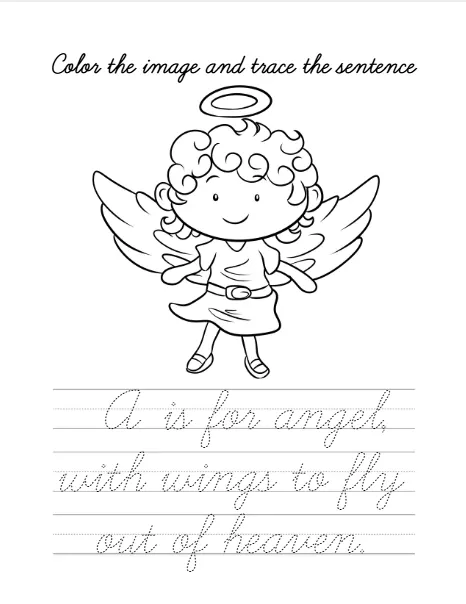
Beyond academics, cursive handwriting carries a unique beauty that printed text and typed words cannot replicate. Each person’s cursive style becomes a form of personal expression; graceful loops, flowing lines, and distinctive letter shapes create writing that is both functional and artistic.
For children, learning cursive can foster pride in their work and a sense of ownership over their writing. A neatly written page feels meaningful in a way that typed text often does not. Cursive also connects children to handwritten letters, journals, historical documents, and family keepsakes, preserving a human touch in communication that digital text lacks.
Focus, Attention, and Reduced Distraction
Typing allows for mindless copying and frequent distraction. Cursive, by contrast, demands sustained attention. Each stroke must be deliberate and controlled, keeping children mentally engaged with the words they are producing. This active engagement promotes deeper comprehension and stronger learning overall.
Conclusion
Cursive handwriting is far from obsolete. It strengthens brain development, accelerates learning, improves memory, enhances spelling, and builds essential motor skills. For young learners, especially in the early elementary years, structured practice through a well-designed cursive workbook can provide lasting academic advantages.
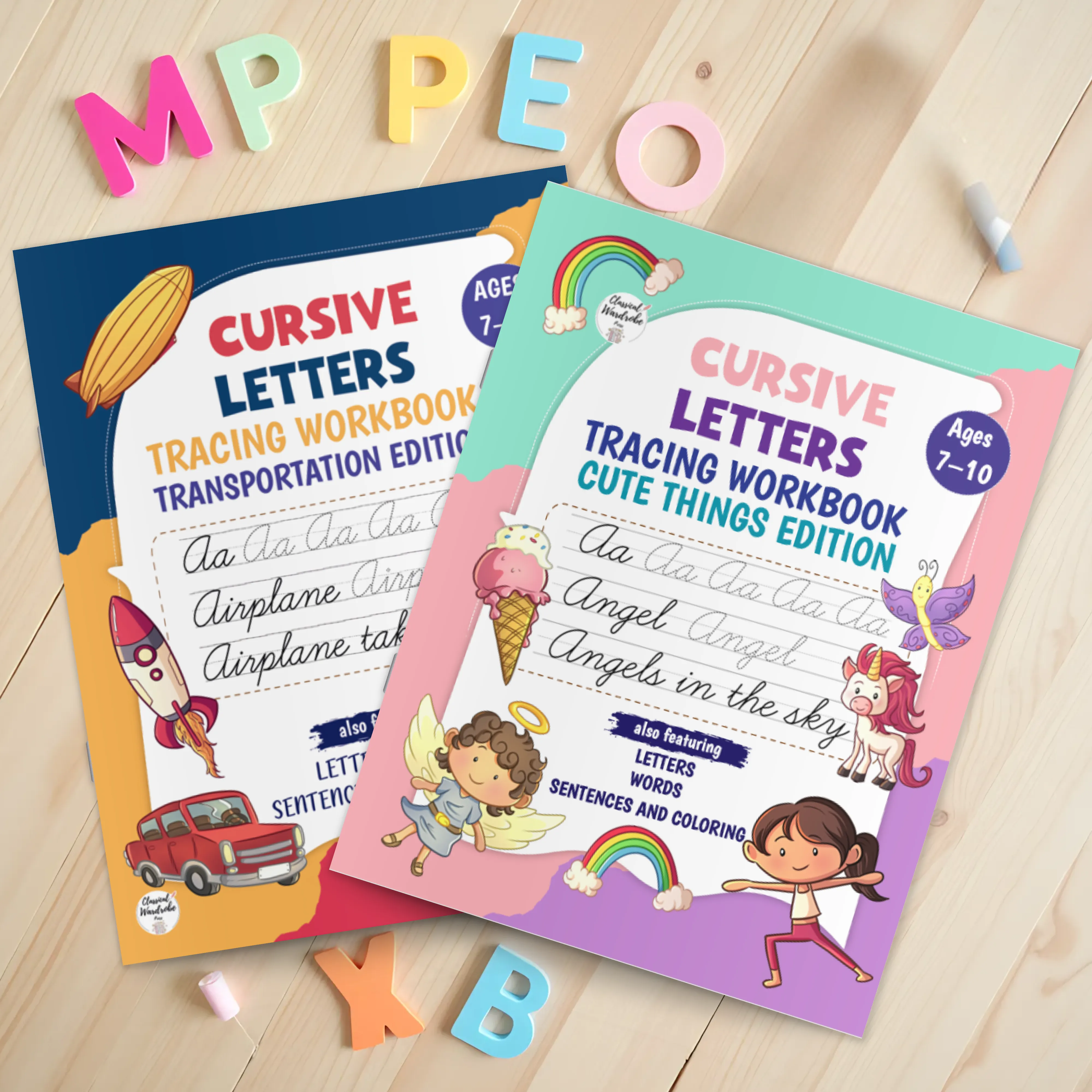
We designed our cursive workbooks to make learning this beautiful art joyful and engaging for children. With delightful themes centered on Cute Things and Transportation, each book transforms handwriting practice into a fun adventure. As children trace and write, they build confidence, improve fine motor skills, and develop fluent cursive while enjoying charming illustrations that keep them motivated to learn.
References
Askvik, E. O., Van der Weel, F. R., & Van der Meer, A. L. H. (2020). The importance of cursive handwriting over typewriting for learning in the classroom: A high-density EEG study of 12-year-old children and young adults. Frontiers in Psychology. https://www.frontiersin.org/articles/10.3389/fpsyg.2020.01810/full
Ratey, J. J. (2021). Why does writing by hand promote better and faster learning? Psychology Today. https://www.psychologytoday.com/us/blog/the-athletes-way/202107/why-does-writing-hand-promote-better-and-faster-learning
Wiley, R. W., & Rapp, B. (2021). The effects of handwriting experience on literacy learning. Psychological Science. https://journals.sagepub.com/doi/10.1177/0956797621993111
National Institute for Learning Development. Connecting writing to the brain: Literacy and technology. https://nild.org/resources/connecting-writing-to-the-brain-literacy-and-technology
Study Nook. (2023). Cursive handwriting: Why it still matters. https://www.studynook.co.nz/blog/cursive-handwriting
PubMed. Handwriting and brain function research summary. https://pubmed.ncbi.nlm.nih.gov/30730894/