
Understanding Suffixes and How They Shape Spelling
Understanding Suffixes and How They Shape Spelling
Apr 07, 2026
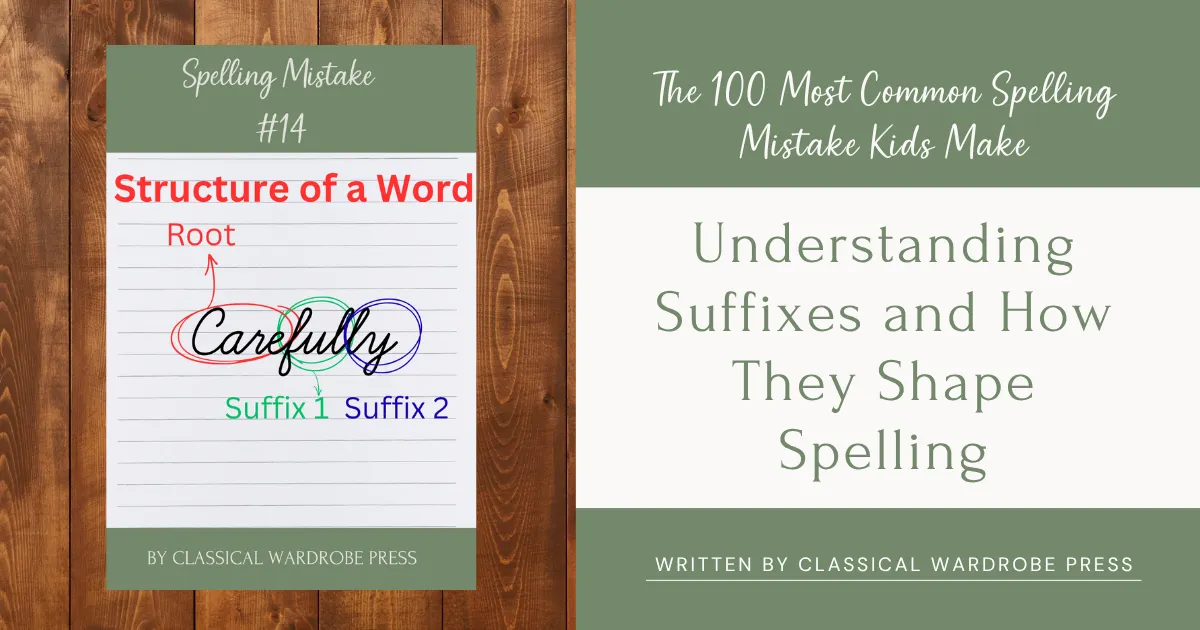
Understanding Suffixes and How They Shape Spelling
Suffixes are small endings added to words, yet they play a powerful role in both meaning and spelling. For children learning to write, understanding suffixes helps move beyond guessing and into recognizing patterns.
Rather than seeing each new word as something entirely separate, children begin to see relationships between words. This builds confidence, accuracy, and a deeper understanding of language.
What Is a Suffix?
A suffix is a group of letters added to the end of a root word.
For example:
- play → playing
- quick → quickly
- hope → hopeful
Each suffix changes the word in a specific way. Some change the meaning, while others change the grammatical role of the word.
Suffixes That Change Word Form
Many suffixes help transform a word from one type to another.
- -er / -est → used for comparison, eg: small → smaller → smallest
- -ly → turns adjectives into adverbs, eg: quick → quickly
- -ness → turns adjectives into nouns, eg: kind → kindness
These patterns are helpful because they are predictable. Once a child understands the function of a suffix, they can apply it to many words.
Common Spelling Patterns with Suffixes
While suffixes follow patterns, they also bring important spelling changes. These are worth teaching gently and clearly.
1. The 1-1-1 Rule (Doubling the Final Consonant)
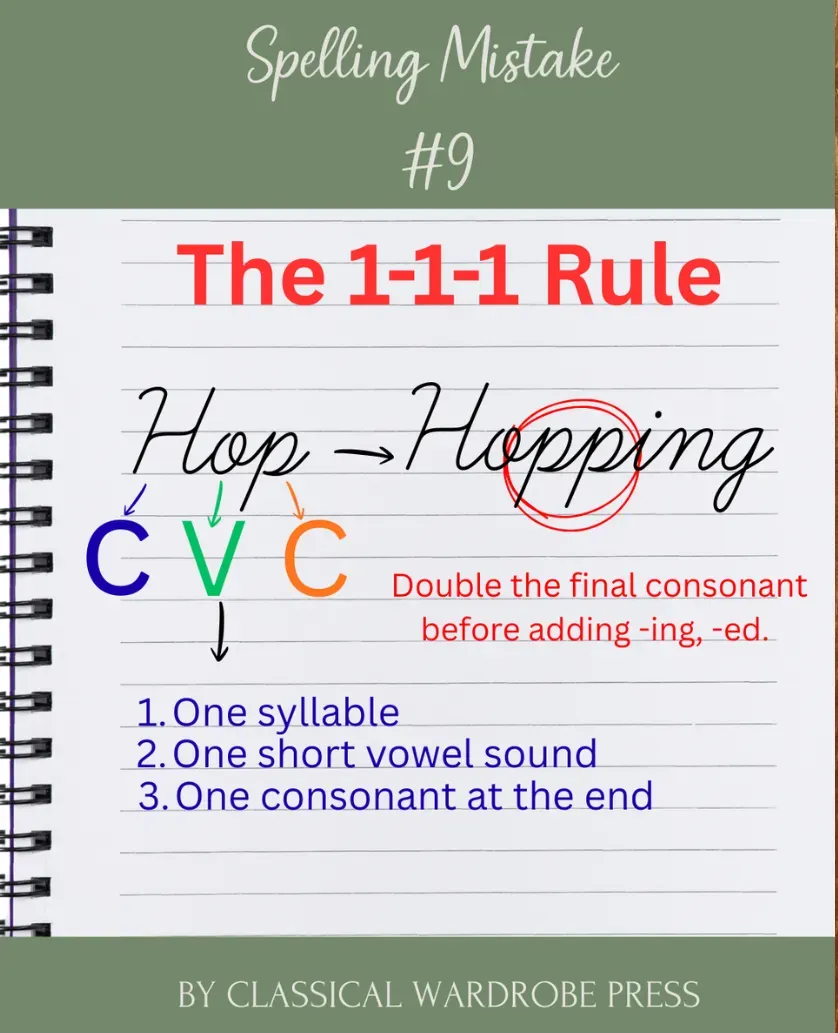
When a word has:
- one syllable
- one short vowel
- one final consonant
Double the final consonant before adding a suffix:
- hop → hopping
- run → running
This prevents confusion in pronunciation and keeps the vowel sound short. We go into more details on the 1-1-1 Rule in a previous post.
2. Dropping the Silent “e”
When a word ends in a silent e, we often drop it before adding a suffix that begins with a vowel:
- make → making
- hope → hoping
However, the e is kept when the suffix begins with a consonant:
- hope → hopeful
See more detailed explanation in our previous post on the Magic "e" Rule.
3. Changing “y” to “i”
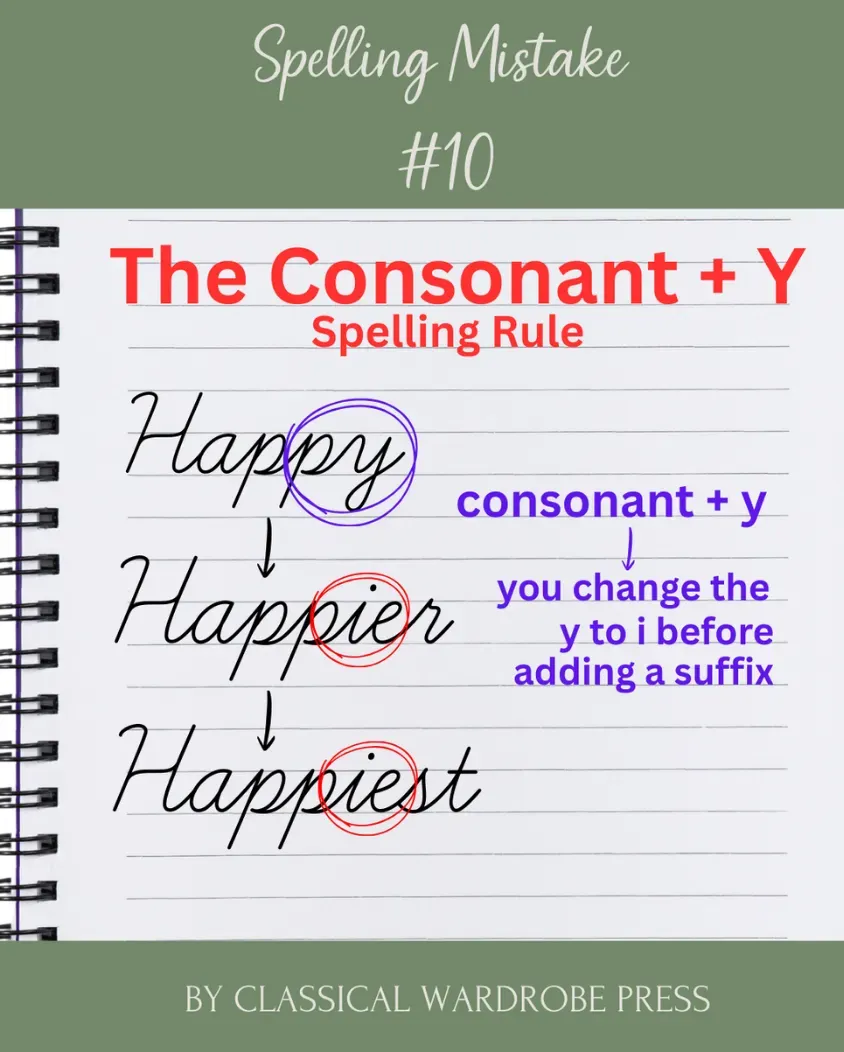
When a word ends in a consonant + y, the y changes to i before adding most suffixes:
- happy → happier
- carry → carried
But the y stays when adding -ing:
- carry → carrying
See more detailed explanation in our previous post on the Consonant + y Spelling Rule.
4. Adding Suffixes Without Change
Sometimes, no spelling change is needed:
- play → playing
- help → helpful
This is important for children to see that not every word requires a rule.
Why Suffixes Matter
For many children, spelling feels difficult because words appear unpredictable. But suffixes reveal that English spelling is not random. It follows patterns that can be learned and recognised.
By studying suffixes, children begin to notice:
- familiar word endings
- repeated spelling patterns
- connections between words
Instead of memorising isolated words, they build understanding.
A Gentle Approach to Teaching Suffixes
In a Charlotte Mason approach, spelling is not taught through long lists, but through careful observation.
A child might:
- copy a well-written sentence
- notice how a word changes with a suffix
- recognize the pattern over time
For example:
The child sees run, running, and runner in context. Gradually, the pattern becomes familiar, much like recognizing a familiar face.
Seeing Words as Living Structures
Words are not random collections of letters. They are built from meaningful parts, roots, prefixes, and suffixes. When children understand this structure, spelling becomes clearer and more meaningful.
With time, practice, and thoughtful attention, suffixes become not a difficulty, but a helpful guide.